What’s art?
Concept, Design, Development
In a world where nearly everything is rated and reviewed, where we often outsource judgment to the crowd, I wondered what would happen if a known rating mechanic could be used to encourage critical thinking about something as vast, cultural, and personal as art.
I have a confession. Making this made me uncomfortable. I love art, but I sometimes struggle in art museums. The cold white walls can feel at odds with the warmth of the work. Wall texts and artist statements often feel abstracted and intellectualized, distanced from the objects they describe. I crave direct, challenging conversations about what art means. Not curator to visitor, but person to person.
This project is reductive, yes. But it mirrors the conversations I have with friends in museums. Casual, personal, and often insecure…poking at the edges of meaning and values.
This is an experiment. An attempt to wrestle with one small piece of a big question. What happens when we try to codify art? Who gets prioritized and who gets left out? Building this, I realized a high score didn’t always represent ‘good’ art to me. The works that lingered with were often the ones I rated lower. They asked more of me. That tension, that reminder of how little I know, is what I love about art. I want to be reminded of how much there is to learn. I want to be humbled and inspired.
Special thanks to The Metropolitan Museum of Art for making their collection data available through the Open Access API, helping make this exploration possible.
Works on mobile. Best on a desktop browser.
Why build this?
Frankly, this is a provocation. If you want to debate the validity of this project, I’ll consider it a success. I’d love to see more debate and dialogue between museums and their visitors. That’s healthy. That’s dynamic. And navigating differences to find commonalities is, I believe, a key component of communities.
Can this level of interaction provide a gateway to deeper questions and conversations?
How do audiences feel to see their voice elevated?
Goals
To establish vocabulary for the evaluation of art that artists and non-artists could understand. Or debate. It’s likely the wrong criteria to someone. Maybe you. That’s okay, and I hope it inspires you to consider what criteria does matter to you.
To create a tool that museum staff could use to better understand how the public views their collection.
To facilitate discussion about the evaluation of art between museum visitors, give educators a tool for the discussion of art and design principles.
Evaluation Criteria
The evaluation criteria was a hybrid of A) the language used in classrooms to teach the general principles of art, B) the framework for the evaluation of art in auctions and, C) informed by conversations with curator friends.
Story: Does this artwork convey a narrative, share a moment, or describe a scene you can imagine happening?
Originality: Consider the time and place this was created. Does this artwork feel innovative, surprising, or different from what you usually see?
Historical Context: Does this artwork help you picture when, where, or how people lived?
Visual Impact: How strong or engaging are the visual elements like color, composition, and detail?
Purpose: Does this artwork seem to have a function or express a message, belief, or deeper idea?
Overall Impression: How much did this artwork resonate with you or stay in your mind? Did it affect you? Make you feel something?
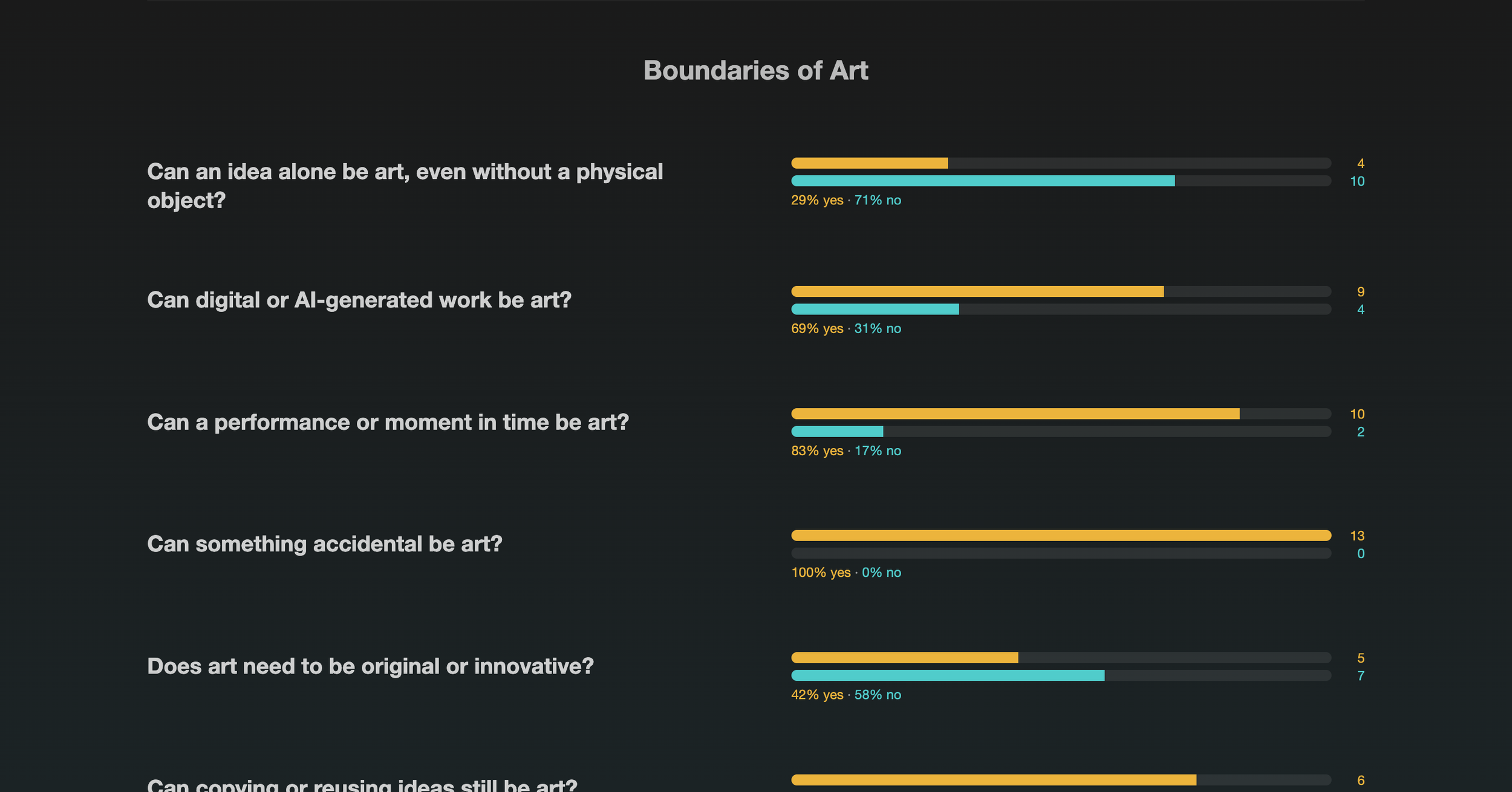
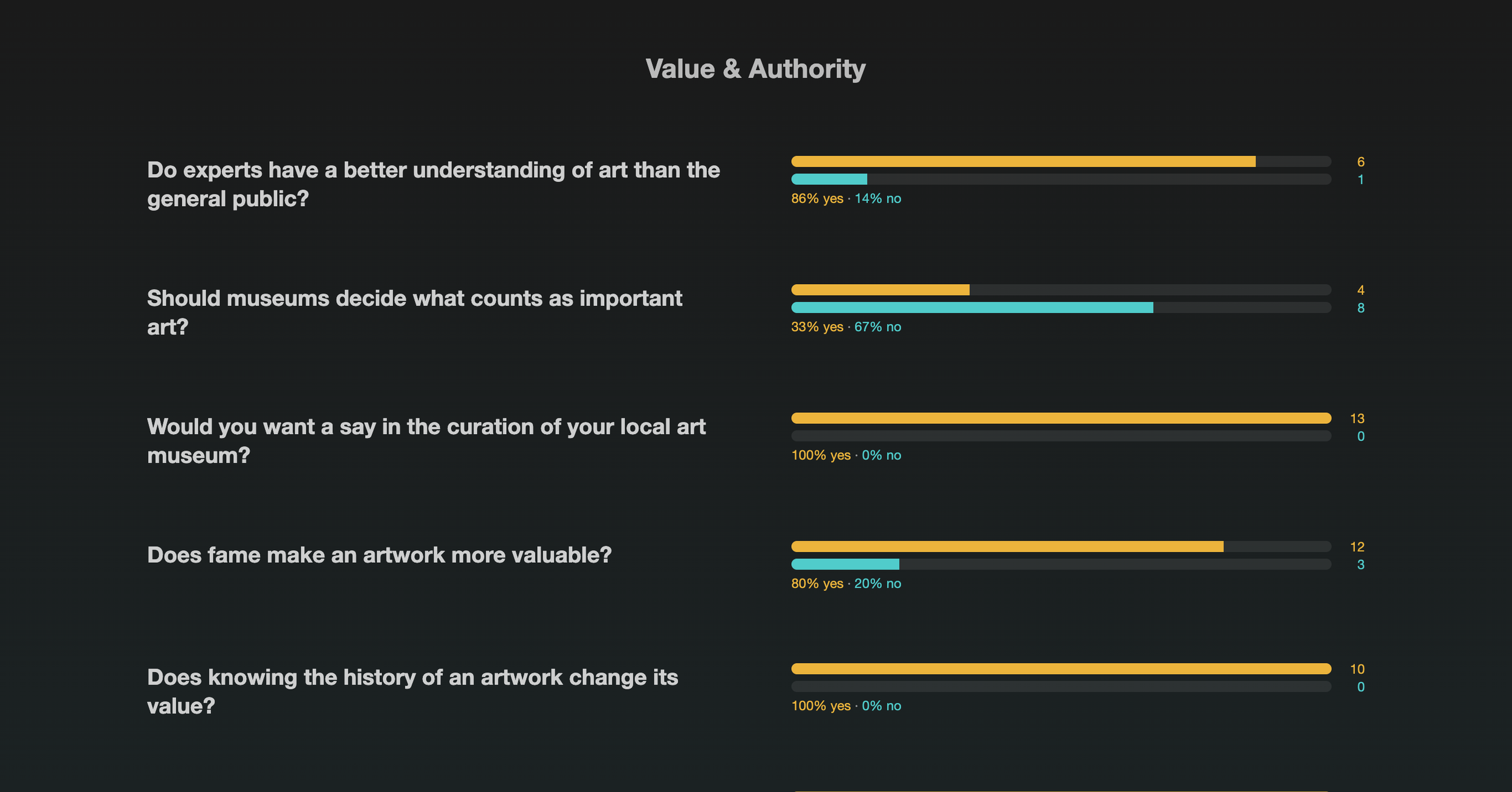
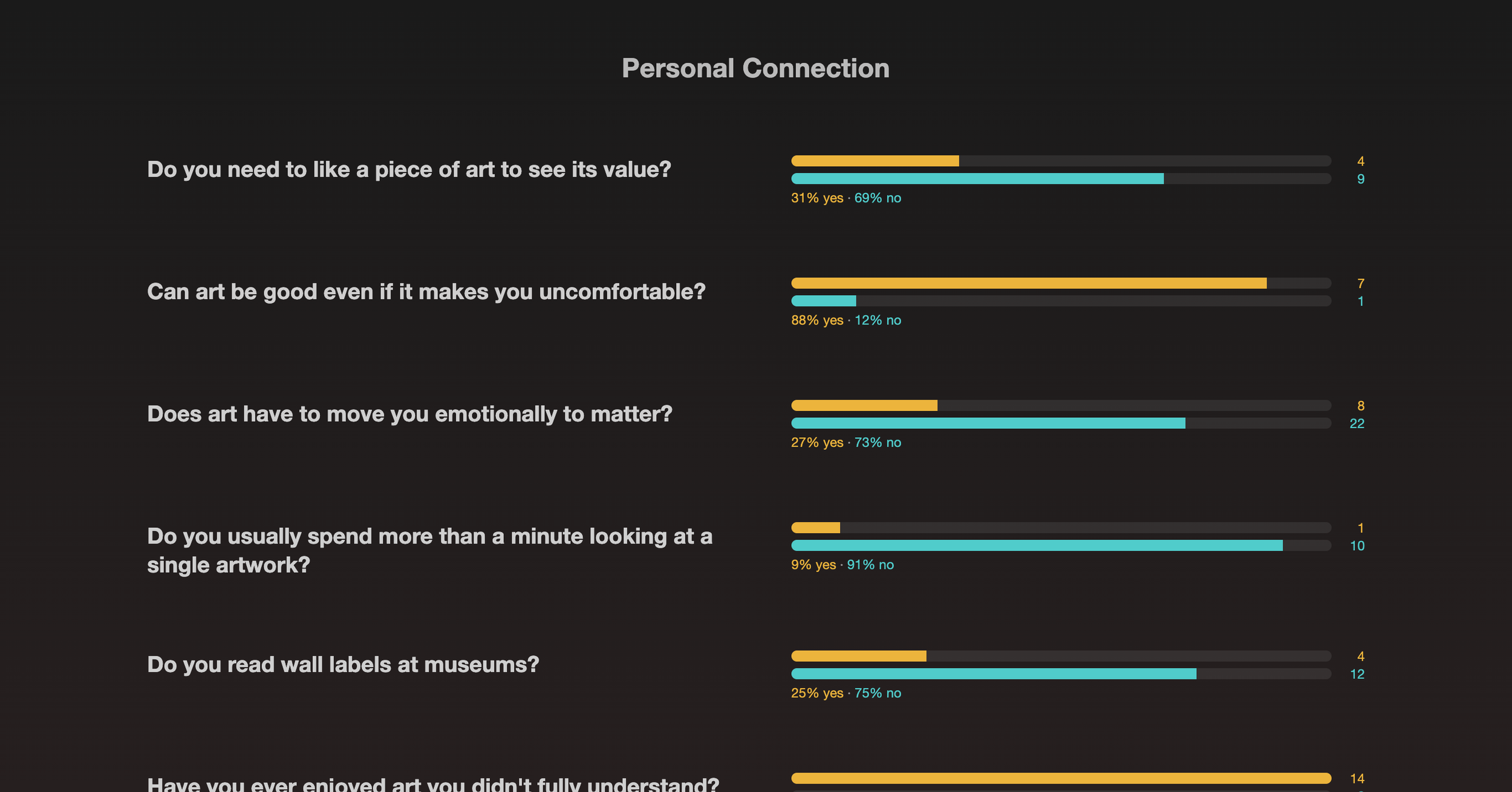
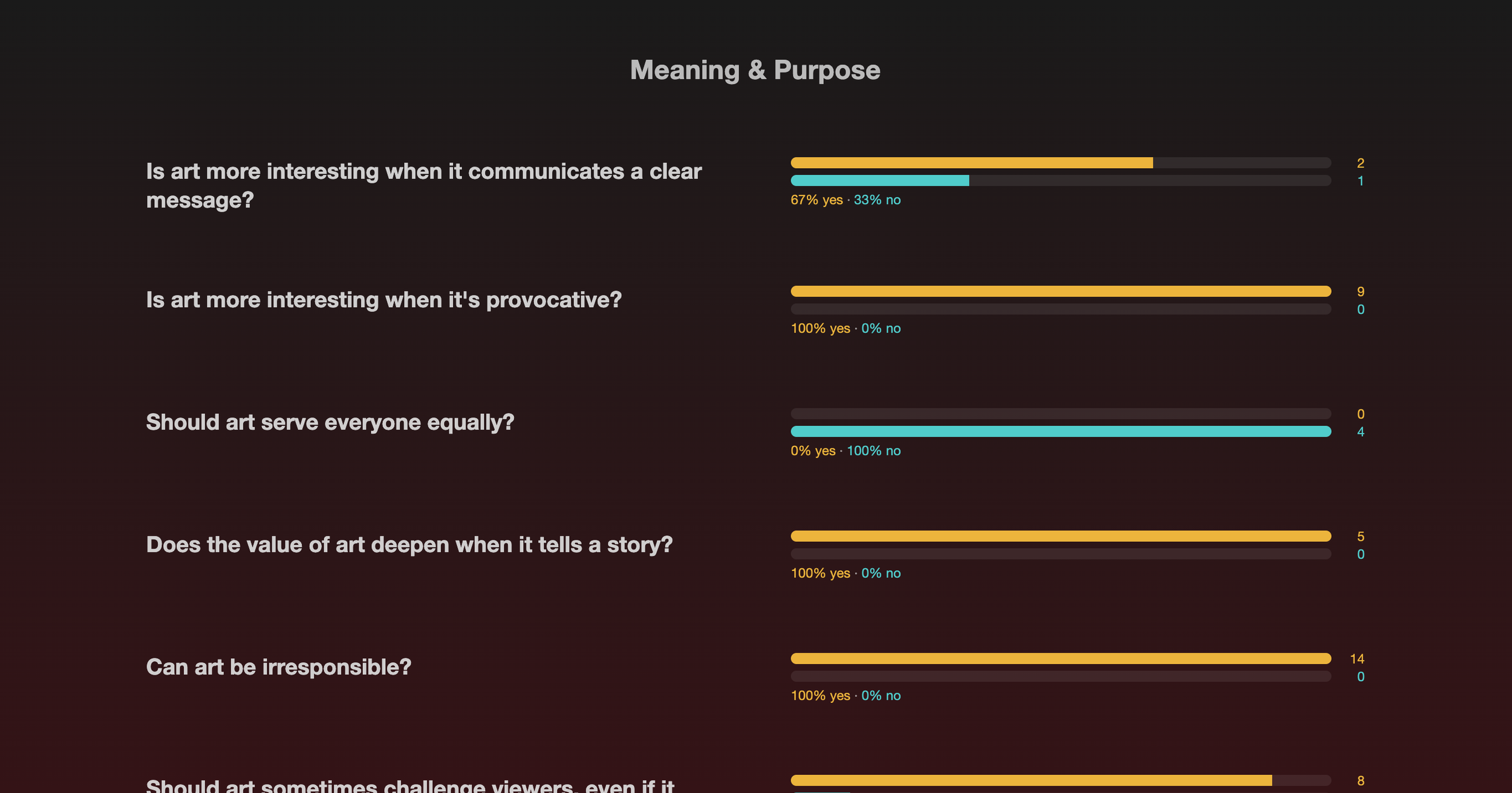
surveys as exhibits
I am interested in designing exhibits that function as living surveys, experiences that invite visitors to share their perspectives and immediately see those values reflected back within a larger community. By anonymously gathering insight, institutions gain meaningful understanding of their audiences, while visitors gain awareness of one another. In this way, evaluation becomes participation, transforming data collection into a memorable and empowering shared experience.
Setting
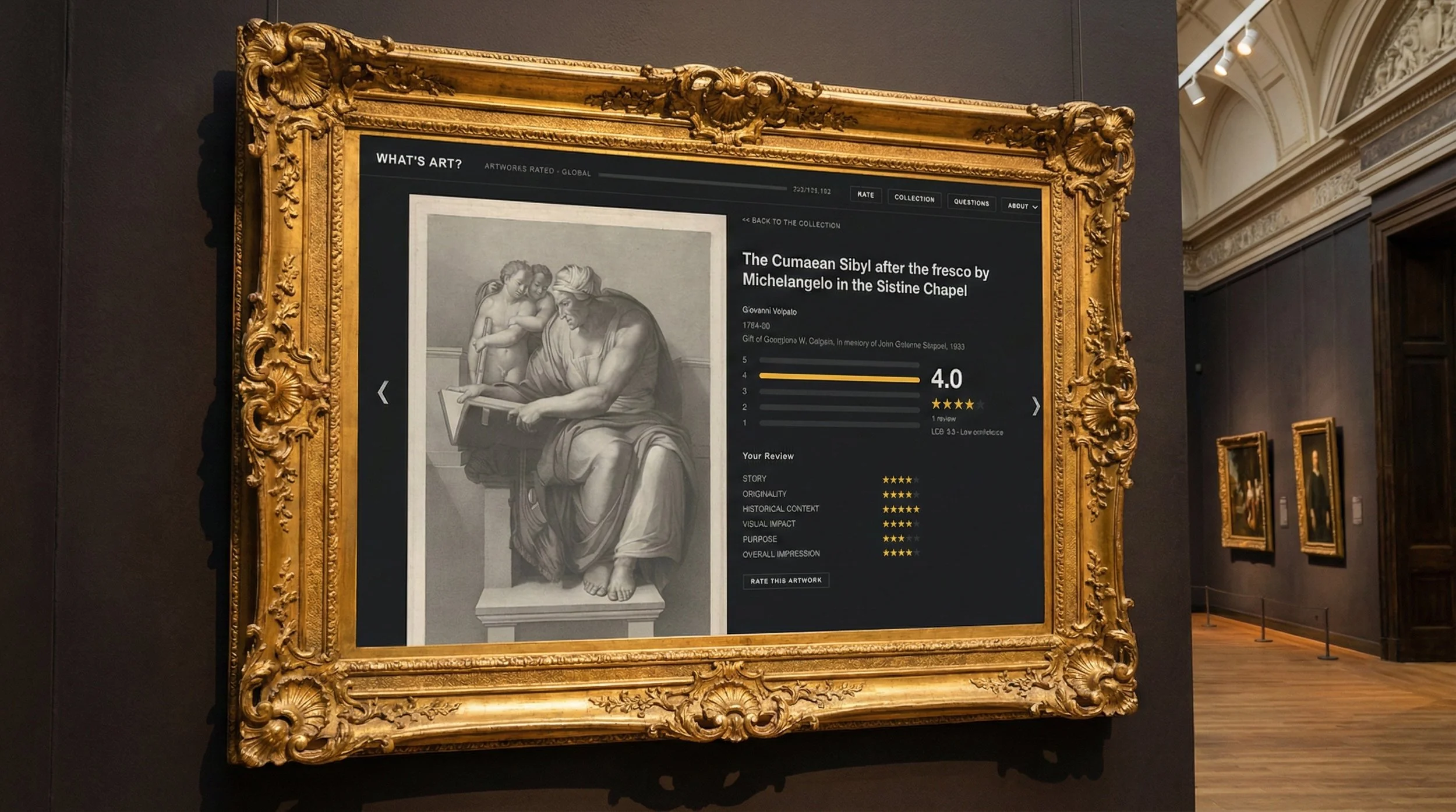
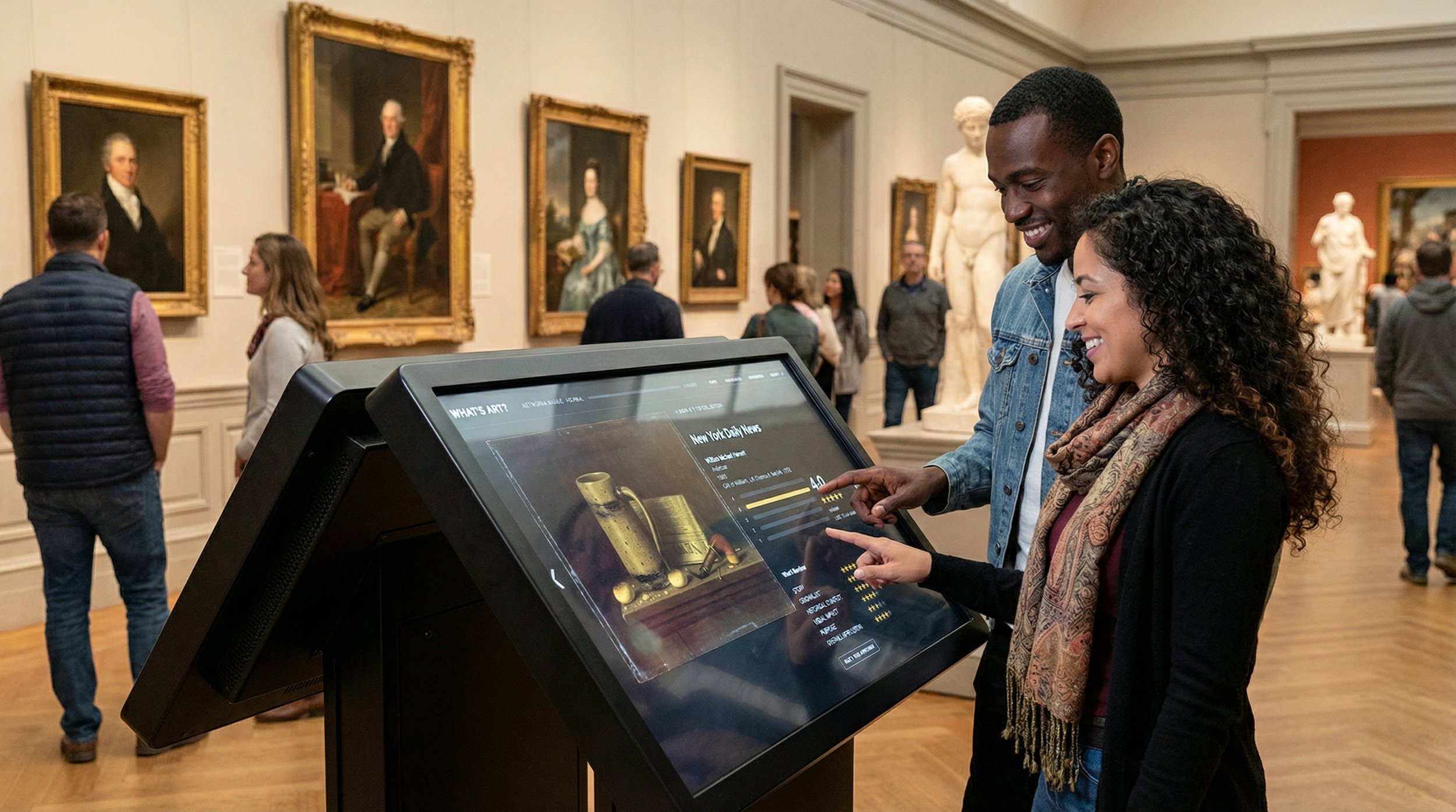
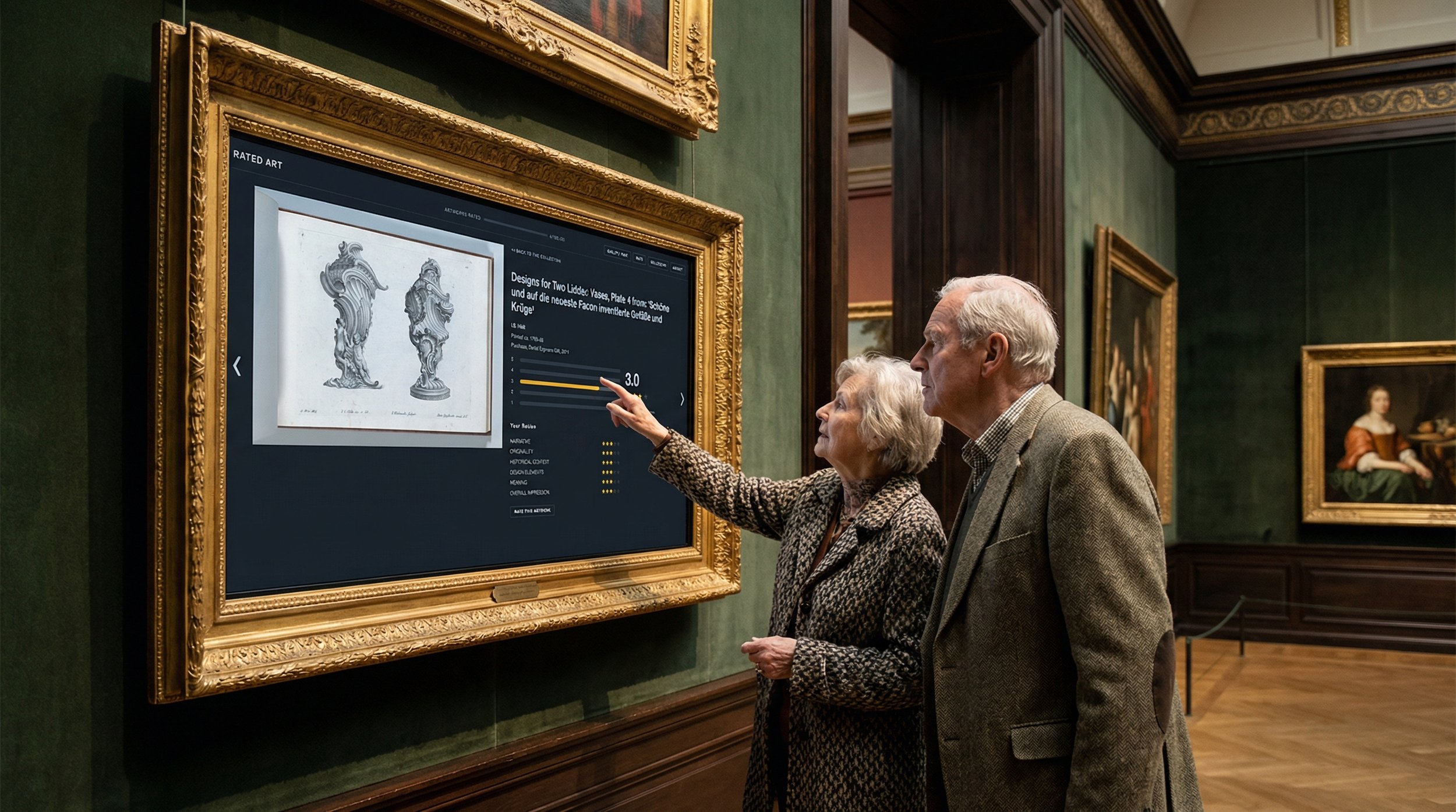
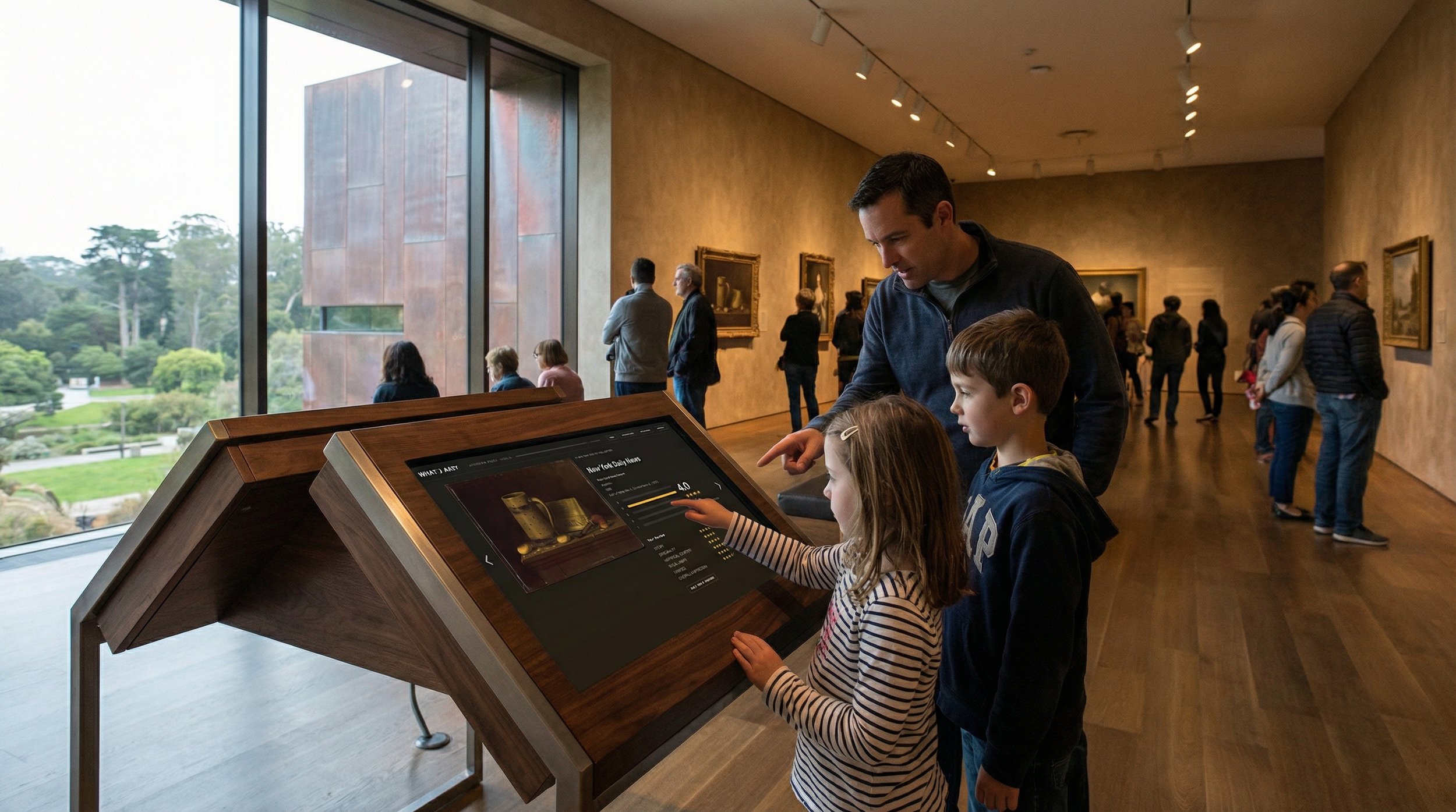
Multiple tablets allow visitors to simultaneously engage. The experience could reference a museum’s larger collection or works specific to a gallery. For inspiration, the concept art below indicates a couple of possible spatial integrations.
Initital Prototype
Three works of art from the Met’s collection, ranked via survey by 30 respondents. A proof-of-concept test of a larger idea in which users rank art on a live website and this data is collected and visualized.
EARLY Sketches
This project began as a color analysis but that idea seemed a little too shallow so I began thinking of other qualities I could measure. Which led me to the idea that the data didn’t need to come from the artwork, rather it could come from the viewer.